
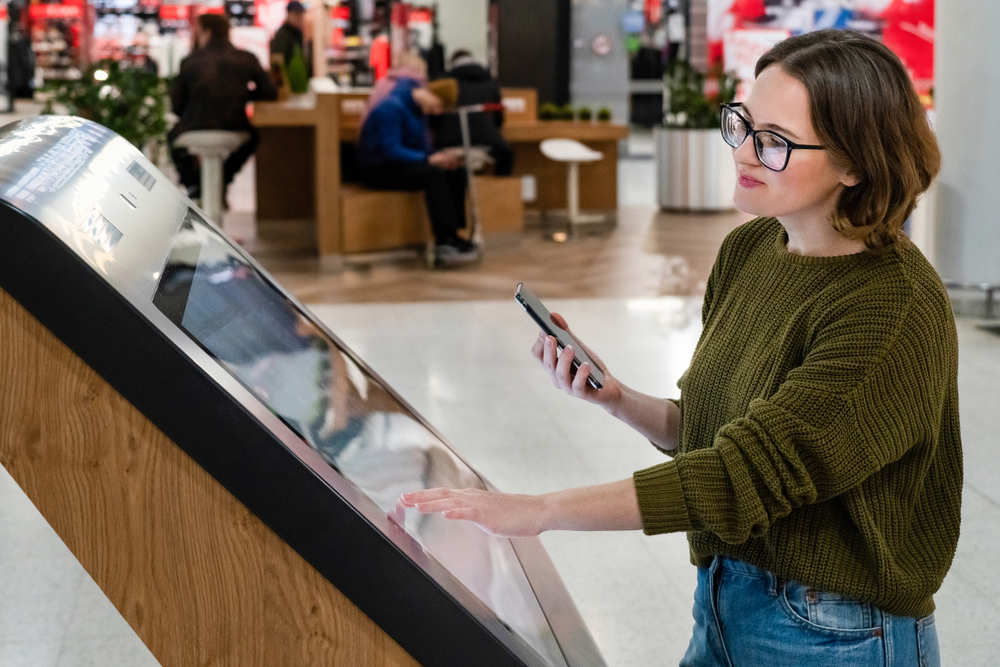
Walk through almost any Dubai mall and you’ll pass a dozen kiosks before you reach the first anchor store. There’s a reason so many entrepreneurs start here: lower upfront costs, faster setup, and immediate access to thousands of daily shoppers. As a low-investment entry point into one of the world’s most active retail markets, the model is hard to beat. While a kiosk may seem like a less formal business setup, getting a kiosk license in Dubai is a legal requirement before you open, and the process is more manageable than most people assume. This Kiosk License Dubai: 2026 Guide guides you through the full process.
Table of Contents
ToggleWhat is a kiosk license in Dubai?
A kiosk license is a trade license issued by Dubai’s Department of Economy and Tourism (DET) that authorises the operation of a small commercial unit in a designated location, be that a mall, transit hub, tourist area, or other commercial space. The distinction from a standard retail license is important. A kiosk operates within someone else’s commercial environment, such as a mall or market, and that environment sets its own rules for design, operating hours, and conduct, in addition to what the DET requires. The license itself covers retail, food and beverage, and service-based operations, depending on the activity code you apply under.
Types of kiosk businesses in Dubai
The activity type you choose shapes the entire application – which documents you need, whether additional approvals apply, and what you’re legally permitted to do. Dubai’s kiosk market spans three broad categories.
Retail kiosks
Location and aesthetic presentation dictate the success of retail models in Dubai. Whether selling perfumes, toys, or mobile accessories, profitability depends on capturing passing shoppers and prompting immediate purchases.
Food and beverage kiosks
Coffee stands, juice counters, dessert booths, snack stalls – grab-and-go F&B concepts have a strong and growing market in Dubai. A well-placed food kiosk can generate consistent daily revenue, but the licensing process involves more steps than retail because food businesses require hygiene inspections and approvals from Dubai Municipality, in addition to the standard DET application.
Service-based kiosks
From phone repairs, printing or key cutting, to henna or express beauty services, service kiosks tend to perform well in transit-heavy locations where customers want something handled quickly. The activity code needs to accurately describe the specific service; broad or vague descriptions cause problems at the approval stage.
Where can you set up a kiosk in Dubai?
Kiosks belong in high-footfall locations, and Dubai has no shortage of them. The challenge is matching the right location to the right product. Shopping malls remain the dominant venue. Dubai Mall, Mall of the Emirates, City Centre Deira, and Ibn Battuta Mall each attract millions of visitors a year. Premium spots in the best malls carry premium rents, but for the right concept, the volume of daily traffic more than compensates. The key is understanding exactly who will be walking past your kiosk in that mall before committing to a space there. Some areas are better suited for specific times and products than others. For seasonal or souvenir-led retail, areas like JBR, Bluewaters Island, and Global Village will put you in front of many tourists. Metro stations and airport terminals are well-suited to fast-turnover products such as snacks, travel accessories and SIM cards. Business districts work well for service kiosks catering to working professionals. For temporary setups with more seasonal demand, event venues and seasonal markets are good choices.
Mainland vs free zone kiosk license
For most kiosk businesses in Dubai, the mainland DET route is the only practical option. The free zone question comes up often, but the answer is usually straightforward.
Mainland kiosk license
A mainland license from the DET is what allows a kiosk to operate in a Dubai mall or public commercial space. It carries no restrictions on trading across the emirate, and since the UAE opened up 100% foreign ownership for most mainland activities in 2021, international entrepreneurs can set up without a local partner.
Free zone kiosk setup limitations
Free zone licenses are structured around specific industry clusters and generally don’t extend to physical retail kiosks in public malls or commercial spaces outside the zone. If the objective is to operate a walk-in kiosk in a Dubai shopping centre, a mainland DET licence is the right structure. Free zone registration tends to suit online retail, import/export, or businesses that operate exclusively within the zone itself.
Requirements to obtain a kiosk license in Dubai
Requirements vary by activity and location, but the core checklist is consistent across applications. Trade name registration comes first – your business name must be approved by the DET, reflect your actual activities, and comply with UAE naming rules. Religious references, offensive language, and misleading names are all prohibited. Activity selection follows. The DET assigns approved codes to every type of business, and the code you apply under has to match what your kiosk actually does. A mismatch at this stage means delays and resubmission. Before the license can be finalised, you need a signed lease agreement or a No Objection Certificate from the mall or space operator. Neither the DET nor the mall will proceed without the other’s involvement, so both tracks run in parallel. Initial DET approval then confirms the business concept is accepted and clears the path to final submission. Food-related businesses and certain service categories also need approvals from other government bodies at this stage.
Documents required for a kiosk license in Dubai
A clean, complete document pack submitted upfront is the single most effective way to keep the process moving. Incomplete applications are one of the most common causes of delays.
Personal identification documents
Passport copies for all partners or shareholders, a UAE visa copy for existing residents, an Emirates ID where applicable, and a passport-sized photo with a white background.
Business documentation
Trade name reservation certificate and initial approval certificate from the DET. If the business involves multiple partners, a Memorandum of Association is required. Applicants currently employed or under UAE sponsorship will also need a No Objection Certificate.
Location agreement
A signed lease or tenancy contract with the mall or space provider, and, where the location requires it, kiosk layout plans covering the structure, branding, and electrical setup. Most malls run their own approval process for kiosk designs before construction begins.
Step-by-step process to get a kiosk license in Dubai
There’s a logical order to this, and it does matter as each step unlocks the next. Try to jump ahead, and you’ll usually end up backtracking anyway.
Step 1 – Choose business activity and concept
Before anything else, get clear on exactly what your kiosk will sell or do. This determines which DET activity code you apply under, and the codes are more specific than you’d expect. “Retail of mobile accessories” and “retail of electronics” are different codes with different requirements. Pick the wrong one, and you’ll have to resubmit. Get it right first, and the rest moves much faster.
Step 2 – Secure kiosk location
This one catches people out more than any other step. You need written approval, or an NOC, from the mall or space management before your license can be finalised. Mall teams will look at what you’re selling, your kiosk design, and where you want to be positioned. The popular spots in busy malls go fast, and some have waiting lists. Start here early, ideally before you’ve kicked off anything else.
Step 3 – Reserve trade name
Pick your business name and register it through the DET portal or with a setup consultant. It needs to reflect what you actually do, follow UAE naming rules, and not already be taken. Using your full name is fine; just a surname or initials on their own won’t pass.
Step 4 – Obtain initial approval
Once your activity is locked in, your name is registered, and you’ve got location approval sorted, you submit for initial DET approval. This is essentially the green light that your business concept checks out and lets you move into the final paperwork stage. If you’re in the food sector or anything health-adjacent, expect some additional sign-offs from other government bodies here too.
Step 5 – Obtain kiosk license
With paperwork done and fees paid, the DET issues the license and you’re good to go. You can start setting up your kiosk, get your POS sorted, and bring staff on board. The license also makes you eligible for a UAE residency visa, and you can sponsor visas for your team from this point.
Cost of starting a kiosk business in Dubai
Total startup costs for a Dubai kiosk typically range from AED 25,000 to AED 80,000, with premium mall locations and more elaborate setups pushing beyond that. The breakdown across cost categories looks roughly like this:
- License fees – DET license fees range from AED 5,000 to AED 15,000 per year, depending on the activity and business structure.
- Rental – Usually the largest variable. Budget malls like Dragon Mart cost between AED 8,000 and AED 15,000 per month. Mid-tier malls like Ibn Battuta cost between AED 20,000 and AED 35,000. Premium locations in Dubai Mall or Mall of the Emirates start at AED 40,000 and go up from there. Most malls require a security deposit of two to six months’ rent on top of that.
- Setup and fit-out – Structure, branding, lighting, display units, and equipment. A mall-specific installation permit typically adds AED 2,000 to AED 5,000.
- Staff – Visa processing ranges from AED 2,500 to AED 6,000 per employee, plus ongoing salary costs.
- Government approvals – NOCs, food safety certifications, and fit-out permits generally add AED 1,000 to AED 2,000 depending on activity type.
- Annual renewal – The DET license renews every year. Budget broadly the same as the initial license fee.
Budget an additional 20%–30% above any quoted figures. Administrative costs have a way of appearing once the process is already underway.
How long does it take to get a kiosk license in Dubai
With a complete document pack and no complications, the DET can process a straightforward application in three to five business days. The full timeline, from initial location enquiries to license in hand, typically runs one to four weeks. The variables that extend it most are mall management approval (which moves on the mall’s schedule, not yours), incomplete documentation, and regulated activity requirements for food or specialist service businesses. Multi-partner structures involving an MOA add a few more steps.
Advantages of starting a kiosk business in Dubai
The appeal of the kiosk model in Dubai comes down to a combination of factors that work unusually well together here. Startup costs are substantially lower than those of a conventional retail unit. License fees, rent, fit-out, and staffing all come in cheaper, which lowers the risk threshold considerably, particularly for first-time business owners or brands testing a new concept before committing to a full store. Footfall is built into the location. Dubai’s major malls pull in tens of millions of visitors a year, and a kiosk positioned in a central walkway or near an entrance gets in front of that traffic without a marketing budget to match. Lease flexibility sets kiosks apart from traditional retail. Short-term agreements make it practical to test a location, pivot to a different spot, or scale back during slower periods – options that simply don’t exist under a standard long-term shop lease. Setup is faster. Most kiosk licenses can be obtained and operational within weeks. The physical fit-out is also simpler, with mall management handling utilities, security, and common area maintenance.
Common mistakes to avoid when starting a kiosk business
A few patterns come up repeatedly among kiosk businesses that struggle in the early months. Location mismatches are the most common. The footfall numbers at a major mall look compelling until you realise your product doesn’t speak to that mall’s typical shopper. Researching a location’s customer profile before signing anything is time well spent. Rental costs surprise more operators than they should. Security deposits, annual escalation clauses, and the gap between headline rent and total occupancy cost all need to be factored in from the start. Premium locations are expensive, and cash flow projections that don’t account for slower opening months tend to unravel quickly. Licensing errors slow everything down. Applying under the wrong activity code, missing a required approval, or submitting incomplete documents means restarting parts of the process. Knowing exactly what your activity requires before submitting avoids this entirely. The NOC from mall management is non-negotiable and cannot be obtained retroactively. Starting the location approval process late or assuming it’s just a formality is almost certain to delay the entire timeline.
How Decisive Zone helps you get a kiosk license in Dubai
Decisive Zone manages the full kiosk setup process, including activity selection, trade name registration, document preparation, DET submissions, and coordination with mall management or other relevant authorities. For regulated service activities, the additional approvals are also handled. The team provides end-to-end support for business setup in Dubai, with clear timelines and no surprises along the way. Whether this is a first venture or an expansion of an existing brand, Decisive Zone offers practical advice, accurate documentation, and a setup that holds up. Get your kiosk business off to a simple, hassle-free start and make a book consultation today.
Frequently asked questions
What is a kiosk license in Dubai?
A trade license from the DET authorising the operation of a small commercial unit, whether a mall stall, service booth, or similar, in a designated location. It’s a legal requirement, and operating without one isn’t an option.
How much does a kiosk license cost in Dubai?
DET license fees range from AED 5,000 to AED 15,000 per year. Total startup costs, including rent, fit-out, staff visas, and approvals, typically span AED 25,000 to AED 80,000+. Premium mall locations sit at the higher end.
Can foreigners open a kiosk business in Dubai?
Yes. Since 2021, the UAE has permitted 100% foreign ownership for most mainland business activities, including kiosks. No local partner is required.
Where can I open a kiosk in Dubai?
Shopping malls are the most popular choice – Dubai Mall, Mall of the Emirates, Ibn Battuta, and others attract the highest footfall. Metro stations, airports, tourist zones like JBR and Global Village, business districts, and seasonal event venues all work for the right product and concept.
How long does it take to get a kiosk license?
DET processing for a complete application takes 3 to 5 business days. The full process, including location approval and any activity-specific requirements, typically takes one to four weeks end-to-end.